
Information
One of the defining characteristics of beauty, femininity, and sensuality in the female figure is the bust. Every woman dreams of the perfect look.
Breast augmentation is one of the most popular surgeries in the world. What are the most preferred implants, and why?
Breast augmentation is performed using implants. There are 3 types of implants depending on their internal content: filled with compact, highly cohesive silicone, with saline solution, or with hydrogel. Modern advances in implants with compact, highly cohesive silicone and a micro-textured surface have made them the preferred choice over the others. They have the advantage of being manufactured in various shapes and, when touched, most closely resemble the natural feel of breast tissue; in the event of a puncture or tear in the shell, the silicone does not leak out. They can be placed under the gland (breast tissue) or under the chest muscle, with the second method being preferred in order to avoid the risk of the implant edges becoming visible, especially around the décolletage.
What determines the shape of the implant that is placed?
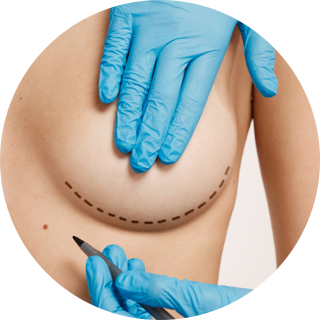
The choice of a specific implant shape depends on the patient's body type and her requirements and desired result. In modern surgery, we have a wide variety of implants, differing in both size and shape. We can choose between round implants with a low profile and a wide base, round implants with a medium profile and base, round implants with a high profile and a narrower base, and anatomical (teardrop-shaped) implants. The incision can be made along the lower edge of the areola, where it is practically unnoticeable, or in the fold beneath the breast, according to the patient's preference. In both cases, the woman can still breastfeed in the event of a future pregnancy.
What are the innovations in breast augmentation?
Plastic surgery is a specialty that never stops evolving. Thanks to advances in implants, we now have the ability to apply various techniques when placing them and to achieve the most natural possible breast appearance, which is of paramount importance to today's women.
What are your patients most often concerned about when undergoing mammoplasty?
Patients' concerns vary widely. Some are worried about the very fact that they are about to undergo a surgical procedure, others are concerned about the anesthesia, while others simply do not know what to expect as a result of the surgery. In most cases, however, the desire for or need for this change outweighs their worries and fears.
Are there any age restrictions for breast augmentation?
Other than the patient needing to be of legal age and not pregnant or breastfeeding, there are no other age restrictions. Of course, each case is strictly individual, and we always take the patient's age and health condition into account before proceeding with the surgery.
How long after the surgery can women return to their usual daily routine and be physically active again?
Usually, the breasts should not get wet for about 5-6 days after the surgery. For a month, patients must wear a special elastic bra and protect their breasts from trauma and other injuries. Only after that can they return to sports activity, and this should happen gradually and with increased caution. Your body itself will show you whether and when it is ready for greater exertion.
Do implants make it more difficult to perform an ultrasound/mammogram of the breasts?
Not only do they not make this type of examination more difficult, but in some cases they even improve visibility. It is still a good idea, however, to visit a mammologist who has experience with patients who have implants.
Can implants also be used after breast cancer surgery?
Yes. We increasingly combine the two surgeries. After removal of the mammary gland, we proceed to place an implant in its place. This way, the psychological trauma for the patient is also lessened, because although with a different bust, she still wakes up with a bust. Even if the two surgeries are not performed together, this does not prevent us from placing the implants at a later stage, when the woman is ready and wishes to do so.
Are they placed for life, or is it mandatory to replace them at certain intervals?
The implant manufacturers themselves recommend replacing them every 10 years, since the material they are made of wears out and may even change shape. In any case, it is a good idea to have a preventive check-up with a mammologist every year, to feel confident about the condition of your breasts.
Will a change in appearance solve issues with one's sense of self?
The reasons requiring a change in appearance can vary widely - both medical and by the patient's own choice. The desire for a specific change is not always simply a form of vanity. A large number of women turn to breast correction after childbirth and breastfeeding, as a result of which their breasts have become "deflated." Of course, there are patients with such deep-seated complexes that, whatever they do, they are always dissatisfied and want more. For most, however, this change marks the beginning of a new life - a life in which they are more confident, feel complete, and are accordingly much happier.
The interview was published in Harper's Bazaar magazine.
 On this page, you can change your choices at any time after you have read and understood our