
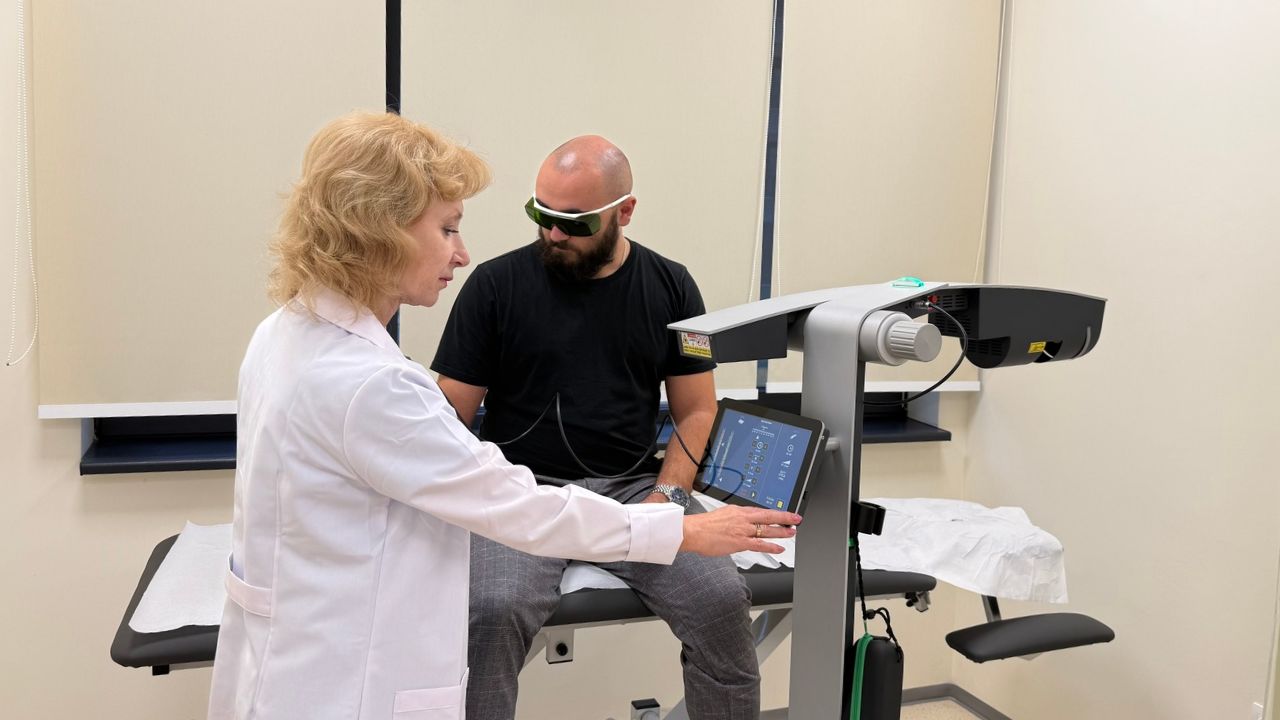
Dr. Nikoleta Georgieva has over 30 years of experience in physical and rehabilitation medicine. Since September she has been part of the team of DCC VITA, where the new Physiotherapy and Rehabilitation Sector has opened its doors. We talk to her about the role of the doctor in the recovery process, about the cases in which rehabilitation is necessary, and why it is sometimes good to seek a specialist before the pain starts to limit our daily lives.
Dr. Georgieva, many people associate your specialty only with “procedures”. What does a doctor of physical and rehabilitation medicine actually do?
Physical and Rehabilitation Medicine is an independent clinical specialty. It covers prevention, diagnosis, treatment and recovery in acute and chronic diseases, after injuries, operations and after prolonged illness and immobilization. Procedures are a tool, but before them comes the medical and functional assessment of the patient. What treatment is needed, when it should start and what restrictions must be observed - this is determined by the doctor.
How does the first meeting with you go?
The first meeting begins with a conversation with the patient about their specific complaints, accompanying diseases, tests performed and therapy. I perform a physical examination. I take into account the diagnosis, general condition, age and the presence of contraindications. Only then do I select the appropriate procedures and determine the duration of the therapeutic course. There is no universal program - the means and duration are determined individually for each patient. In the sector I work together with three rehabilitation therapists of DCC VITA.
What problems do people most often come with?
Patients most often seek help for diseases and pain of the musculoskeletal system - arthroses, arthritis, muscle and tendon injuries, as well as pain related to overload. We also often work with patients after injuries such as fractures, sprains and dislocations, as well as after orthopedic operations - arthroscopy or hip and knee replacement.
Another large group are patients with neurological problems - radiculitis, neuritis, disorders of balance and coordination, as well as residual manifestations after cerebrovascular diseases. In all these conditions, the goal is to reduce pain, improve mobility and restore the patient’s functional capabilities as much as possible.
Is rehabilitation a stand-alone treatment?
Rehabilitation is often part of comprehensive treatment and is combined with therapy prescribed by the relevant specialist - orthopedist, neurologist, cardiologist, pulmonologist, pediatrician, etc. Depending on the disease and the patient’s condition, it can play a significant role in recovery.
The sector also works with pregnant women and with babies. Why is this important?
During pregnancy the body bears a serious load. Back and lower back pain may appear, and posture changes. With suitable, individually selected exercises, a woman can stay active and maintain good physical shape. After childbirth, we work on restoring the abdominal muscles, the pelvic floor and muscle strength, including after cesarean section. Rehabilitation can be part of recovery also in conditions such as diastasis of the abdominal muscles and incontinence, after assessment of the specific case.
For babies and small children, rehabilitation is prescribed after a pediatric and functional assessment. It may be necessary in cases of delay in motor development, deviations in muscle tone, as well as postural and orthopedic problems. In these cases early assessment is especially important, since it allows difficulties to be identified in time and appropriate measures to be taken to support motor development. We always work in partnership with the parents, who have an important role in the recovery process and the child’s development.
What equipment does the sector have?
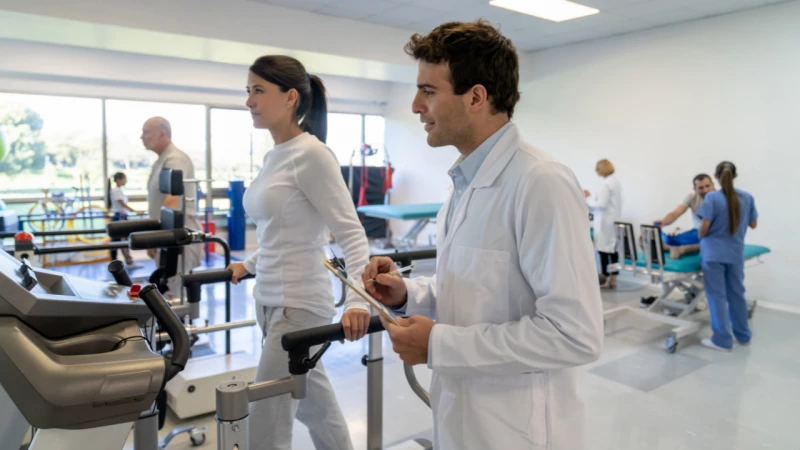
We have devices for: electrotherapy, ultrasound therapy, magnetotherapy, light therapy, high-energy laser, vacuum therapy, electromagnetic stimulation and deep oscillation, as well as a combined device for cryo- and compression therapy. We also have devices for passive motion of the shoulder and knee joints. They are especially useful in the period after surgery, when the patient still cannot move the joint independently, but it is important to gradually restore the range of motion. The sector has equipment and fitness gear for therapeutic exercise.
Does a person need to have pain or a specific problem to seek a specialist in physical and rehabilitation medicine?
Not necessarily. A consultation can be useful even before pronounced complaints appear, especially with a sedentary lifestyle, prolonged work in a seated position, incorrect posture or recurring pain in the back, limbs and joints. With age, physical capacity can also decrease.
During the examination I assess posture, muscle balance, joint mobility and the patient’s functional capabilities. I prepare an individual program, which may include therapeutic exercise and suitable physiotherapy procedures. The goal is for the measures to be tailored to the specific condition, age and abilities of the person.
What would you advise people who postpone the examination in the hope that the pain will go away on its own?
Not every pain means a serious problem, but when it recurs, lasts a long time or starts to limit movements and daily activities, it should not be neglected. A timely assessment helps clarify the cause of the complaints and determine which approach is suitable. The earlier we identify functional difficulties, the greater the opportunity to take measures before they lead to more serious limitations.
What is the most important thing you want patients to know about rehabilitation?
Rehabilitation is not limited to a series of procedures. It is a process in which the doctor, the rehabilitation therapist and the patient work together to achieve specific functional goals. It is important for the patient to participate actively in their recovery and to follow the recommendations, including on regimen and physical activity outside the medical facility. Our goal is not only to relieve pain, but to help the patient restore and maintain good physical activity and independence for as long as possible.
 On this page, you can change your choices at any time after you have read and understood our